Why Tariff Policy Matters More Than Most Think
Closer Capitalist·June 1, 2026·Markets & the Economy
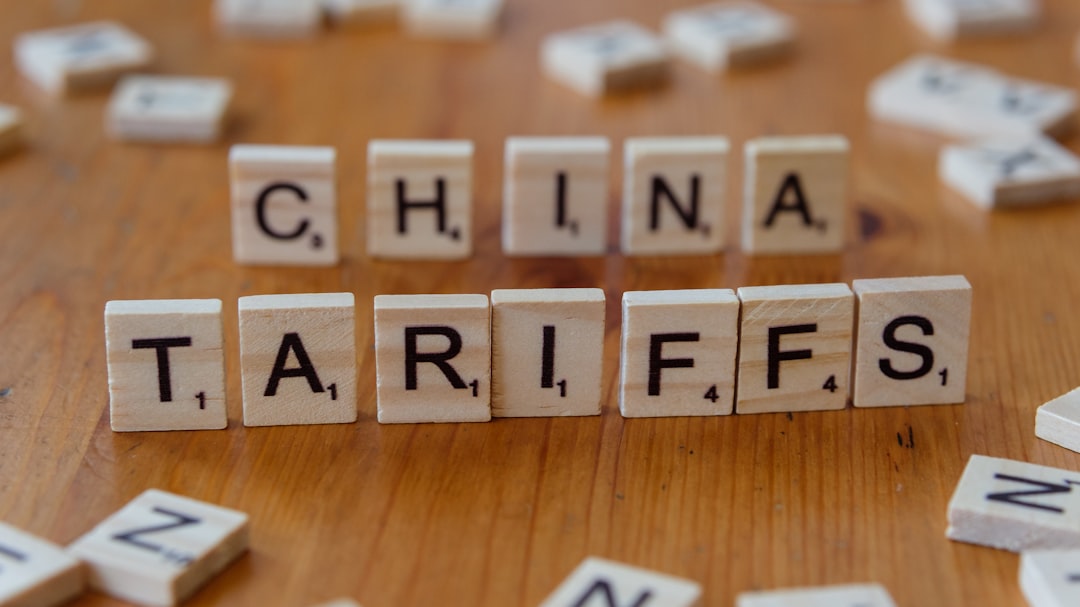
We hear a lot of noise out there, don’t we? Daily headlines, cable news shouting matches, internet echo chambers. Everyone’s got an opinion, a hot take, a prediction. But when it comes to the real mechanics of how our economy actually works, how our wallets get lighter or heavier, how our businesses either thrive or just barely survive, there’s one area that’s constantly undersold, underestimated, and frankly, ignored by most folks: tariff policy. Yeah, I know, sounds dry. Sounds like something economists argue about in dusty rooms. But trust me, we’re here to tell you why this stuff matters, and why it’s impacting you right now, whether you realize it or not.
The Invisible Hand That’s Actually Quite Visible
We’re talking about tariffs. Those taxes on imported goods. Simple concept, right? But the ripple effects? They’re anything but. Most people, when they think about tariffs, picture some abstract trade dispute between governments.
Beyond the Diplomatic Dance
This ain’t just about who’s shaking hands with whom at fancy international summits. This is about the stuff we buy. The clothes on our backs, the electronics controlling our lives, the parts that go into the machines that build everything else. When the government slaps a tariff on it, someone has to pay. And guess who that usually ends up being? That’s right. Us.
The Price Tag You Don’t See
We’ve got data here - hard numbers - showing that tariffs are already lifting prices. The St. Louis Fed, smart folks, they estimate that tariffs explained a good chunk of headline PCE inflation, that’s the overall inflation number we all see, and a significant slice of core PCE, which strips out the volatile food and energy prices. We’re talking points of a percentage here, sure, but over a year? Those points become dollars. Those dollars become a noticeable dent in your grocery bill, your car payment, your everyday expenses. It’s not some hypothetical future problem; it’s happening now.
The Broadening Net of Tariffs
And it’s not just a few isolated cases anymore. J.P. Morgan is looking at probes into 60 trading partners. Sixty! That’s a massive expansion of this policy. They’re talking new tariffs under Section 301, and even a 15% global tariff announced under Section 122 after some other tariffs were, let’s just say, challenged. This isn’t a targeted strike; it’s a sweeping offensive, and the net is getting wider and wider.
Understanding the implications of tariff policy is crucial for businesses navigating the complexities of international trade. A related article that delves into advanced financial strategies for business owners can provide valuable insights into how tariffs affect financial planning and decision-making. For more information, you can read the article here: Advanced Financial Strategies for Business Owners. This resource highlights the importance of adapting financial strategies in response to changing tariff landscapes, emphasizing that a proactive approach can significantly impact a company’s bottom line.
Passing the Buck: Who Really Pays?
One of the biggest misconceptions is that the country imposing the tariff is the one that truly benefits or that the burden is shared equally. That’s a fantasy. When tariffs go up, the cost has to go somewhere.
The Consumer’s Burden
Princeton’s Layna Mosley, a sharp analyst, points out that importers face a choice: absorb the tariff, which shrinks their profit margins, or pass it on. And guess what? Econometric studies on recent tariffs show a stark reality: higher prices for U.S. consumers. They aren’t magic; they can’t just eat the cost of a 10%, 20%, or even higher tariff hike and keep their businesses afloat. That extra cost gets tacked onto the final price tag, directly impacting our purchasing power.
When Your Basket Gets More Expensive
Think about it. That new phone? That piece of furniture? Even the ingredients for the food on our tables - many of them come from overseas. When tariffs on those imported goods rise, so does the cost for the businesses that use them. And because competition is fierce, and profit margins are often thin, that extra cost gets passed straight down the line to you and me. It’s a direct hit to the pocketbook.
The “Made in America” Premium
We often hear the argument that tariffs will bring jobs back, revive manufacturing. And sure, in some niche cases, it might offer a slight boost. But for the vast majority of goods, the cost of production, even with tariffs, often still favors offshore manufacturing. What we end up with is a “Made in America” premium that most families simply can’t afford. It’s a nice sentiment, but a tough pill to swallow when you’re trying to make ends meet.
Reshaping the World, Not Restoring the Past
Tariffs aren’t just economic tools; they’re geopolitical ones. And their impact is fundamentally altering global trade flows.
The Great Supply Chain Migration
Princeton is also reporting on how U.S. imports from China have plummeted. From a hefty 22% of goods imports back in 2018, they’ve fallen to a mere 9% by late 2025. That’s not some minor adjustment; that’s a seismic shift. But where did that trade go? It didn’t just disappear. It shifted. Mexico and Vietnam are seeing a significant influx as companies scramble to find alternative sources that aren’t burdened by punitive tariffs.
The Mexican Tire and the Vietnamese Shirt
This isn’t about bringing industries back to where they were decades ago. It’s about finding the next best option, often with its own set of challenges and costs. The infrastructure in Mexico might be better poised to absorb some of this, but Vietnam? It’s a different story, a different set of logistics, and potentially, different quality controls and labor standards. We’re not just trading one supplier for another; we’re weaving a new, more complex, and arguably less efficient global tapestry.
The Domino Effect on Global Markets
And this reshuffling isn’t happening in a vacuum. It affects other countries, other economies. When a major player like the U.S. suddenly reroutes massive amounts of trade, it creates vacuums, it creates opportunities, and it creates new dependencies. The countries that benefit might not have the capacity to absorb everything, leading to inflation there, labor shortages, or other unforeseen consequences. It’s a global game of Jenga, and pulling out one block can destabilize the whole structure.
The Cost to Our Standing
Beyond the dollars and cents, the aggressive use of tariffs is having a profound impact on how the world views us, and on our own economic leverage.
Losing Friends, Making Enemies
Chatham House, a respected think tank, argues that this aggressive tariff use isn’t just raising prices and slowing growth here at home; it’s actively pushing our partners away. When we brandish tariffs like a cudgel, especially against allies, we erode trust. We undermine the very rules-based trading system that has, for decades, facilitated global stability and prosperity. It signals a move towards protectionism and unilateral action, which rarely bodes well for long-term international cooperation.
The “America First” Backfire
The idea of “America First” sounds appealing to some. But when it translates to alienating trading partners, imposing tariffs that hurt our own consumers and businesses, and signaling a departure from global norms, it starts to look more like “America Alone.” And being alone in the global economy is rarely a position of strength.
The Erosion of Credibility
Our word, our agreements, our standing in international forums - these are all valuable assets. When we arbitrarily impose tariffs, often with justifications that are seen as weak or politically motivated, we chip away at that credibility. Why should other countries trust our long-term commitments if we are willing to abandon established trade agreements at a moment’s notice?
Understanding the intricacies of tariff policy is crucial for anyone interested in the broader implications of international trade. A related article that delves into effective strategies for navigating complex market dynamics can be found at Mastering High Ticket Closing Strategies for Success. This piece highlights how businesses can adapt their approaches in response to changing economic conditions, which is essential in the context of evolving tariff regulations.
The “Free Money” Fallacy: Revenue and Reality
There’s a narrative that tariffs are a way to generate revenue for the government, a sort of “free money” that doesn’t impact the economy. That narrative is deeply flawed.
The Growing Tariff Coffers
MAIA reports that U.S. tariff collections have reached significant figures, hitting $27 billion in just one month, June 2025. If current levels persist, they could exceed $300 billion annually. This is a substantial amount of money, and it’s understandable why it might seem like a good deal.
The Political Allure of Hard Cash
For governments facing budget pressures or looking for new sources of income, tariff revenue can be incredibly appealing. It’s a tangible number, a direct inflow. This can make it politically attractive, especially when framed as a way to fund domestic programs or reduce other taxes.
The Hidden Costs of Collected Cash
But here’s the kicker: this revenue comes at a cost. As we’ve discussed, that cost is borne by consumers and businesses through higher prices and reduced purchasing power. Furthermore, many economists are highly skeptical that this policy is actually reviving manufacturing. The PIIE (Peterson Institute for International Economics) points out that tariffs are regressive, meaning they disproportionately affect lower-income households. They don’t fix the overall trade balance, and they are not a proven method for reversing long-term manufacturing decline. So, while the government might be collecting more cash, the overall economic health and equity might be suffering.
The Real Story: Public Concern and Economic Reality
When all is said and done, and despite the complex economic arguments, the most relatable impact of tariffs is often the simplest: inflation.
The Inflation Anxiety
CBS News reporting confirms what we all feel in our everyday lives: public concern remains firmly centered on inflation. A majority of Americans expect tariffs to raise short-term prices, and this sentiment directly explains the negative public approval that these policies often receive.
The Grocery Store Blues
We’re not talking about abstract economic models; we’re talking about the prices we see at the grocery store, at the gas station, when we’re buying new appliances or paying our utility bills. When tariffs make imported goods more expensive, or when they disrupt supply chains leading to shortages, those costs invariably find their way to the end consumer. It’s direct, it’s tangible, and it’s what drives public opinion.
The Disconnect Between Policy and People
There’s often a significant disconnect between the policymakers who champion tariffs and the people who actually experience their consequences. The theory might be about protecting domestic industries or rebalancing trade, but the lived reality for most Americans is higher prices and a shrinking budget. Until policymakers start addressing the immediate, felt impact of tariffs on the cost of living, they’ll continue to face public skepticism and disapproval.
So, there you have it. Tariff policy isn’t some niche academic debate. It’s a powerful force shaping our economy, our supply chains, and our global standing. It’s a force that’s already making our goods more expensive, reshuffling industries across the globe, and potentially weakening our position on the world stage. We need to pay attention, because this isn’t just abstract policy; this is about the price of your next purchase, the stability of your job, and the economic future we’re building for ourselves and our kids.
FAQs
What is a tariff policy?
A tariff policy is a government’s plan for imposing taxes on imported goods. These taxes are intended to protect domestic industries and promote economic growth.
How does tariff policy affect the economy?
Tariff policy can impact the economy in various ways. It can protect domestic industries from foreign competition, but it can also lead to higher prices for consumers and trade tensions with other countries.
Why is tariff policy important?
Tariff policy is important because it can have significant effects on a country’s economy, trade relationships, and overall prosperity. It can also be a tool for achieving political and diplomatic goals.
What are the potential drawbacks of tariff policy?
Some potential drawbacks of tariff policy include higher prices for consumers, retaliation from other countries, and disruptions to global supply chains. It can also lead to trade wars and economic instability.
How can individuals and businesses respond to changes in tariff policy?
Individuals and businesses can respond to changes in tariff policy by diversifying their supply chains, seeking out alternative sources for goods, and advocating for policy changes through political channels. They can also adjust their pricing and business strategies to mitigate the impact of tariffs.